

“It was better next year.” — old Burner joke
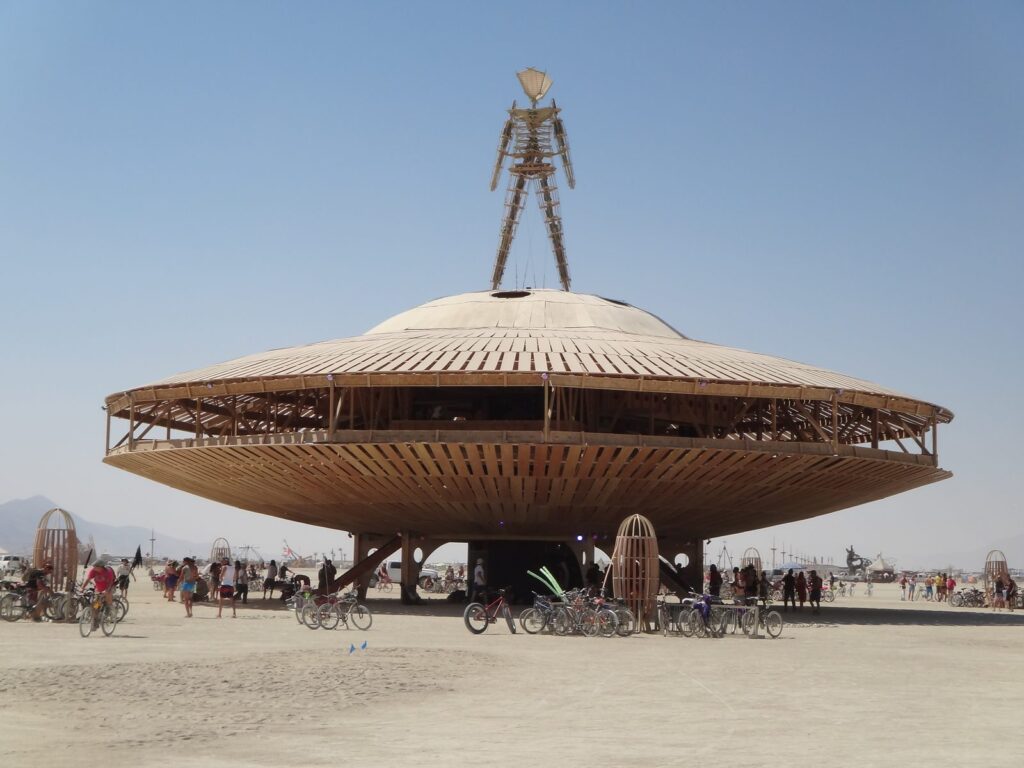
There is a city that exists for one week a year, on a dead lakebed in Nevada where nothing grows and nothing is forgiven. Seventy thousand people build it: streets laid out like a clock face around a wooden man, neighborhoods, an airport, hundreds of theme camps, art the size of buildings. Nothing in it is for sale except ice and coffee. Everything you see was hauled three hours up a two-lane highway by people who paid for the privilege, built on their own vacation time and grocery money, given away all week, and then burned or unbolted and hauled out again — the desert swept so clean afterward that inspectors on hands and knees find nothing. By October it is a blank page. It is the least reasonable thing I know of, and the most important.
I got there in 2011, freshly out of a ten-year relationship, and the city felt like home before I’d finished unpacking. The temple that year was called the Temple of Transition, which was either a coincidence or the city introducing itself. There was a gamelan inside and an Earth Harp outside, and I stood in the middle of my own new life and listened. I hadn’t come as a spectator, either — that same year I was out at Quemaduras del Sol with the wiring, the first year of the regional effigies circling the Man. My hands were in the city from the start, and that turned out to be a decade-long habit.
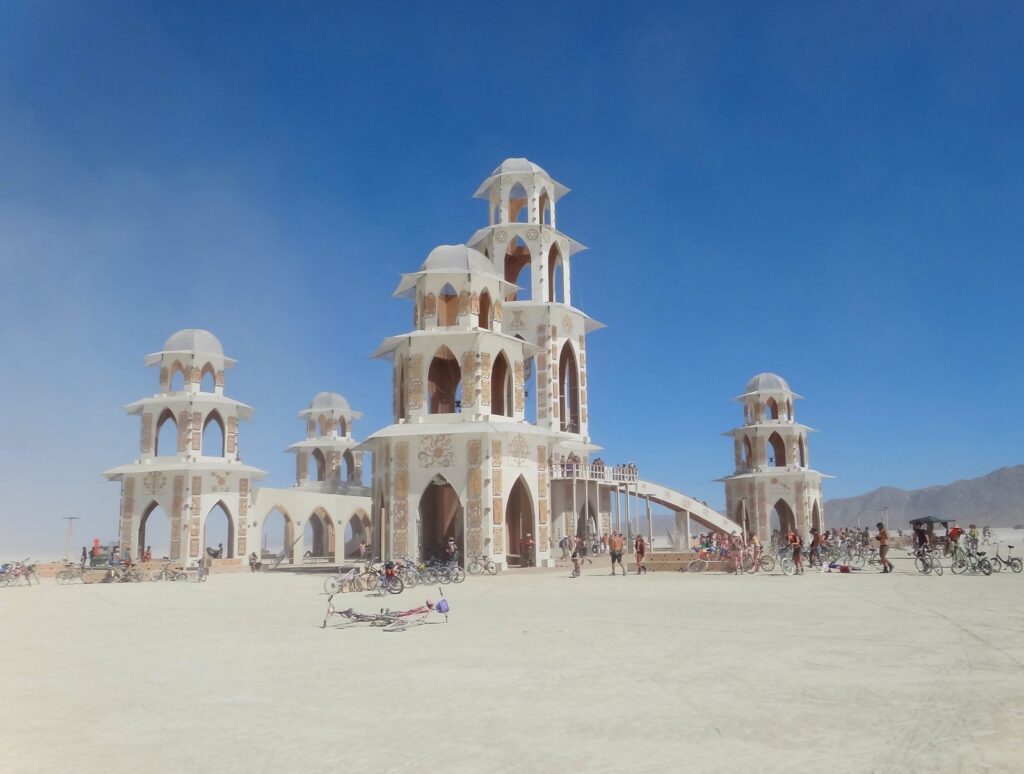
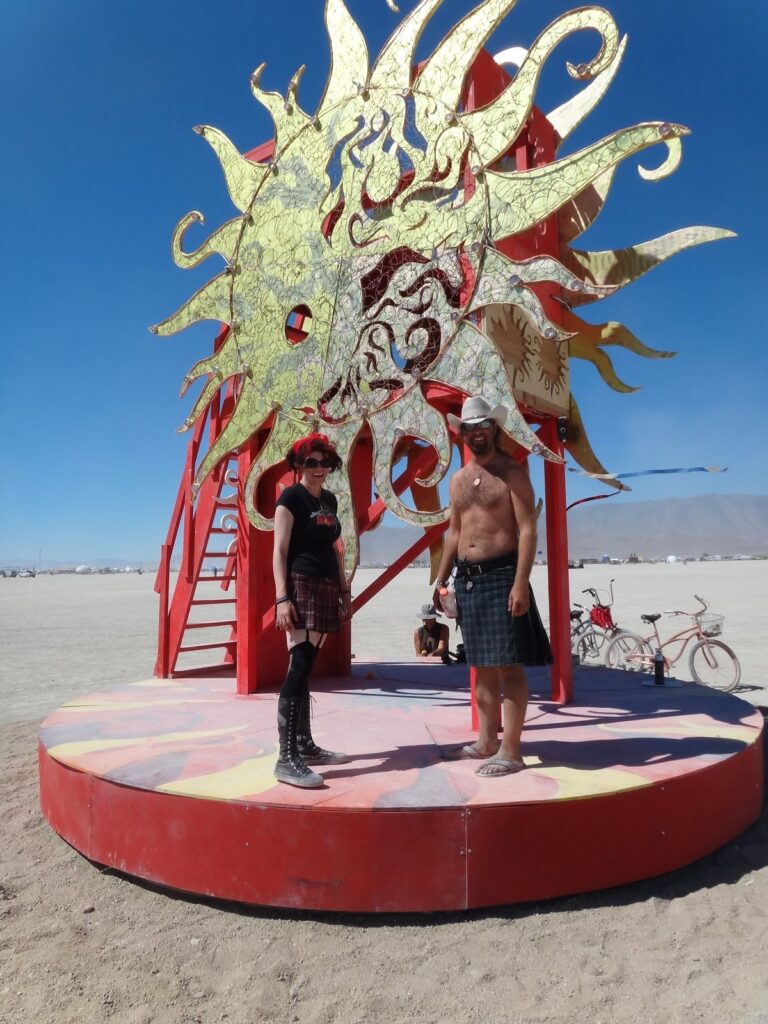
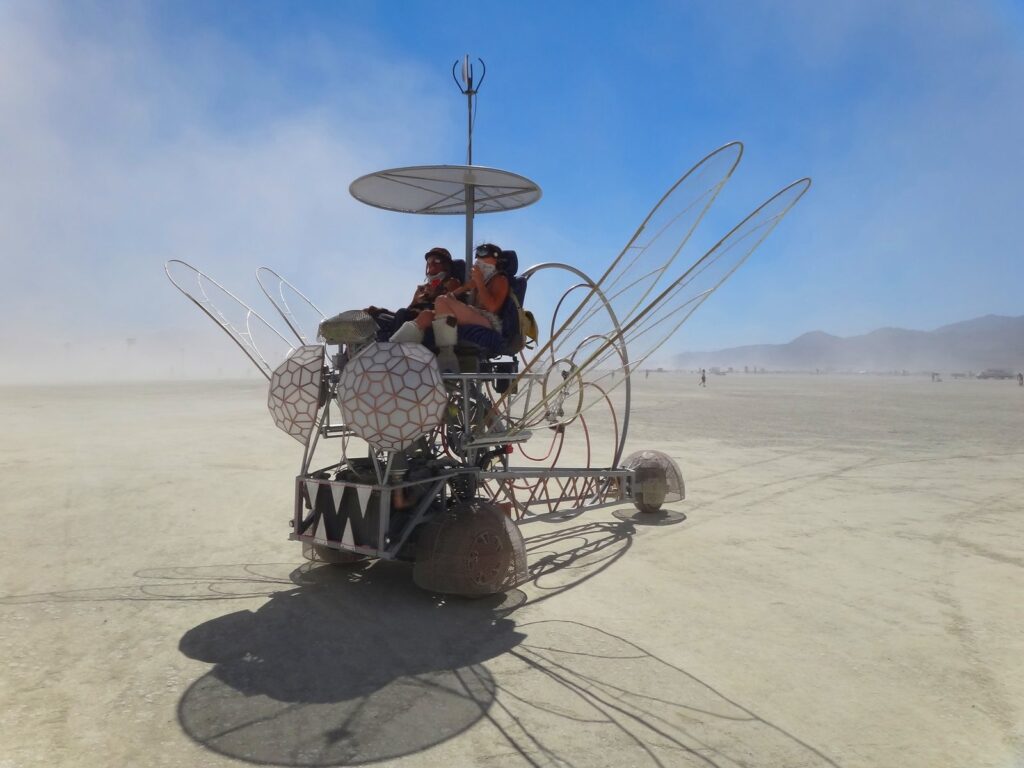
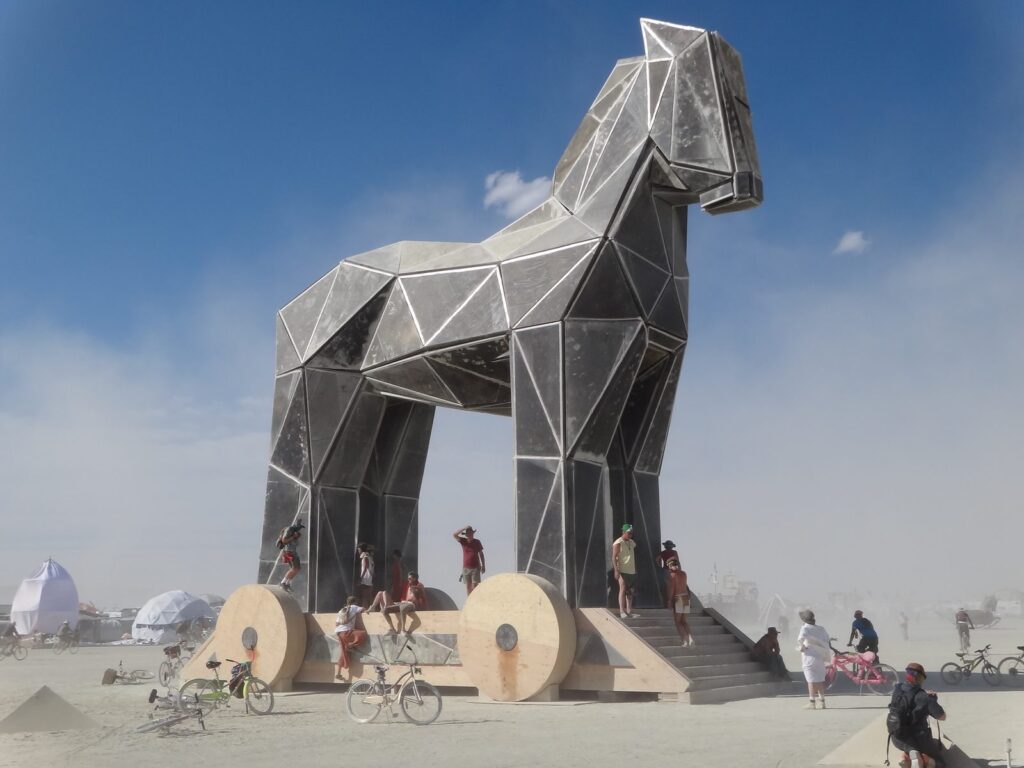
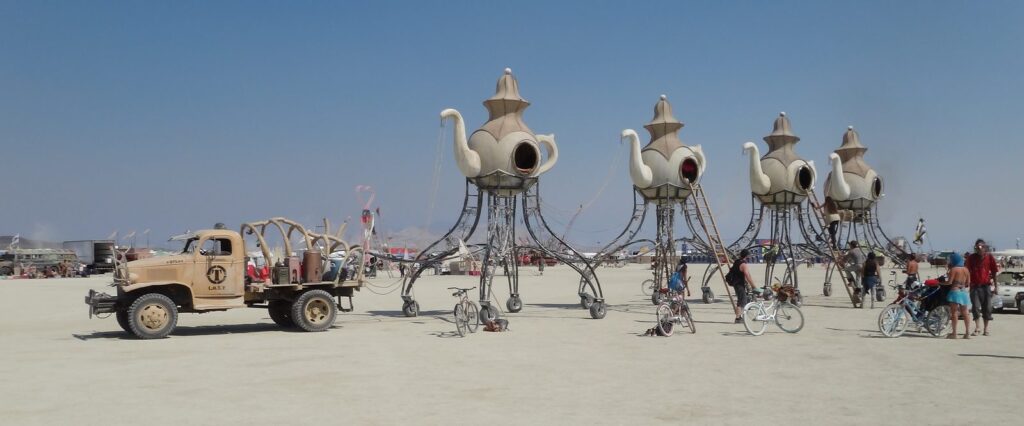
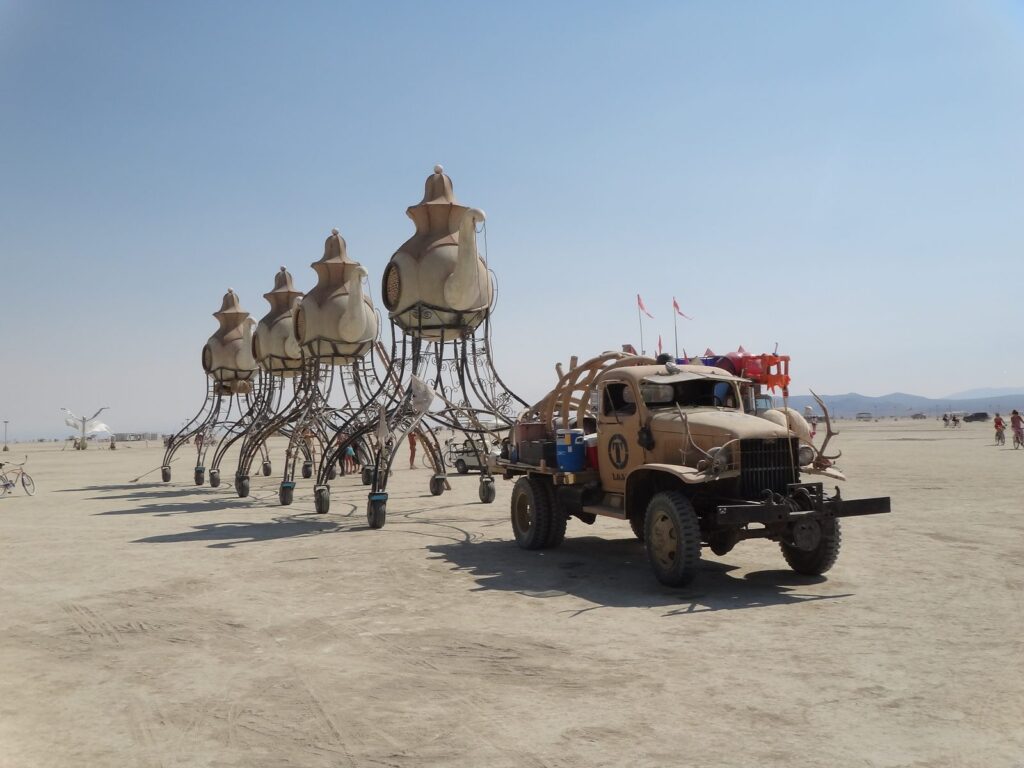
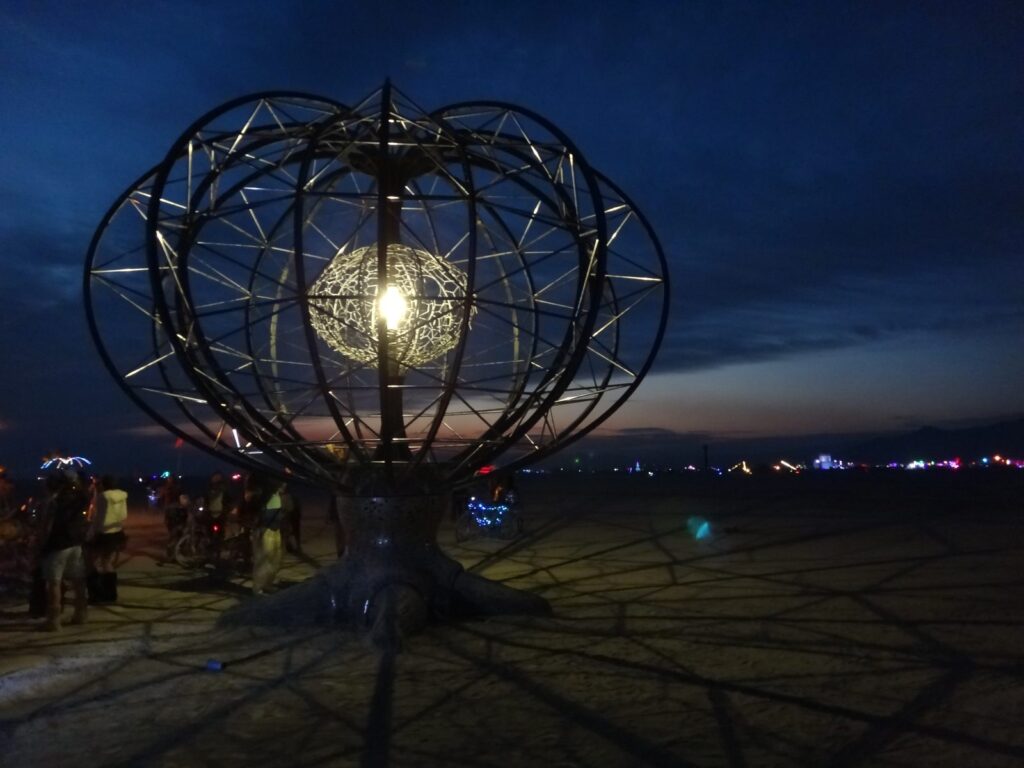
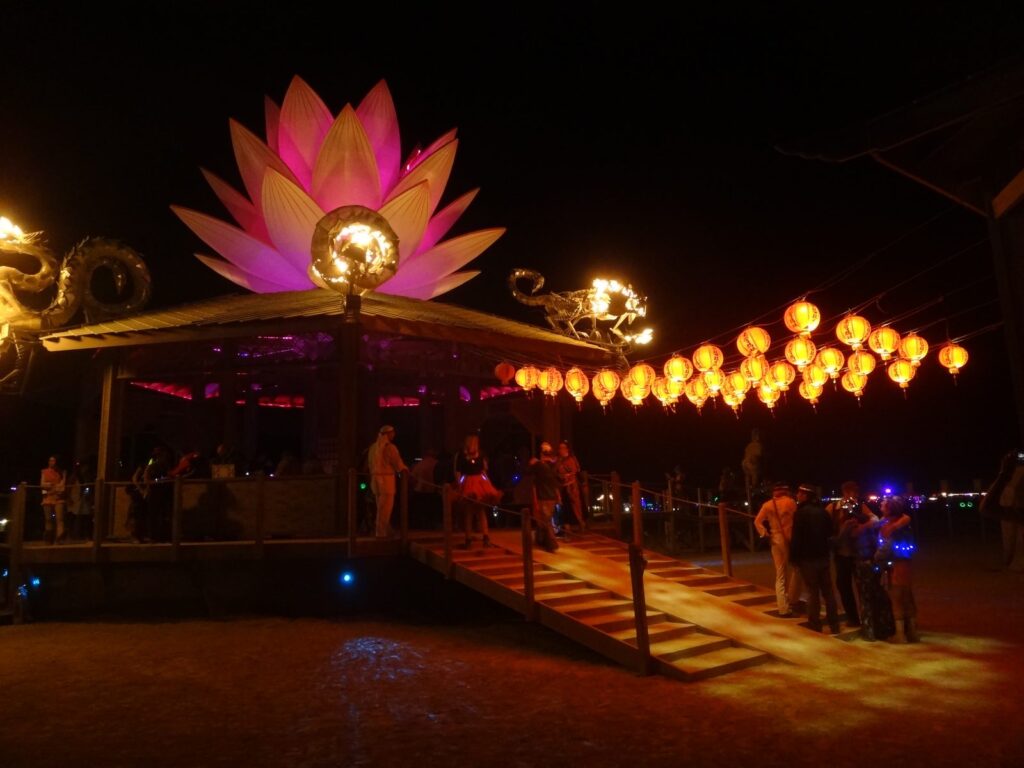
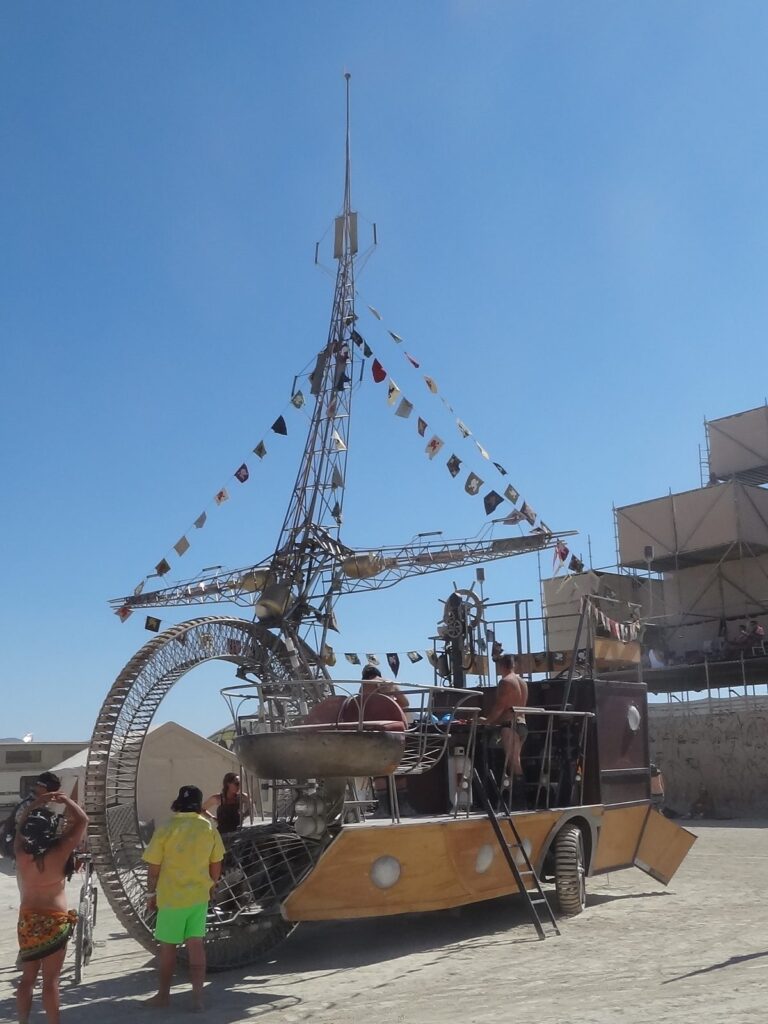
What kind of city is it? Consider what it keeps: a thirty-foot damselfly turning in the wind. A Trojan Horse, built to be burned. A procession of two-story teapots walking to a tea party across an ancient seabed. A bronze molecule you can climb, a goddess of the empty sea raised by artists from Taiwan, a glowing organism called EPOD that looks like it landed rather than got built. And a steampunk pirate ship in full sail down the Esplanade — Clock Ship Tere, by Andy Tibbets, whom I gawked at as a stranger my first year and worked beside at a Reno makerspace years later, having no idea they were the same man. When people asked Andy why he was building a pirate ship, he had the whole city in his answer: “Because pirate ships don’t build themselves.”
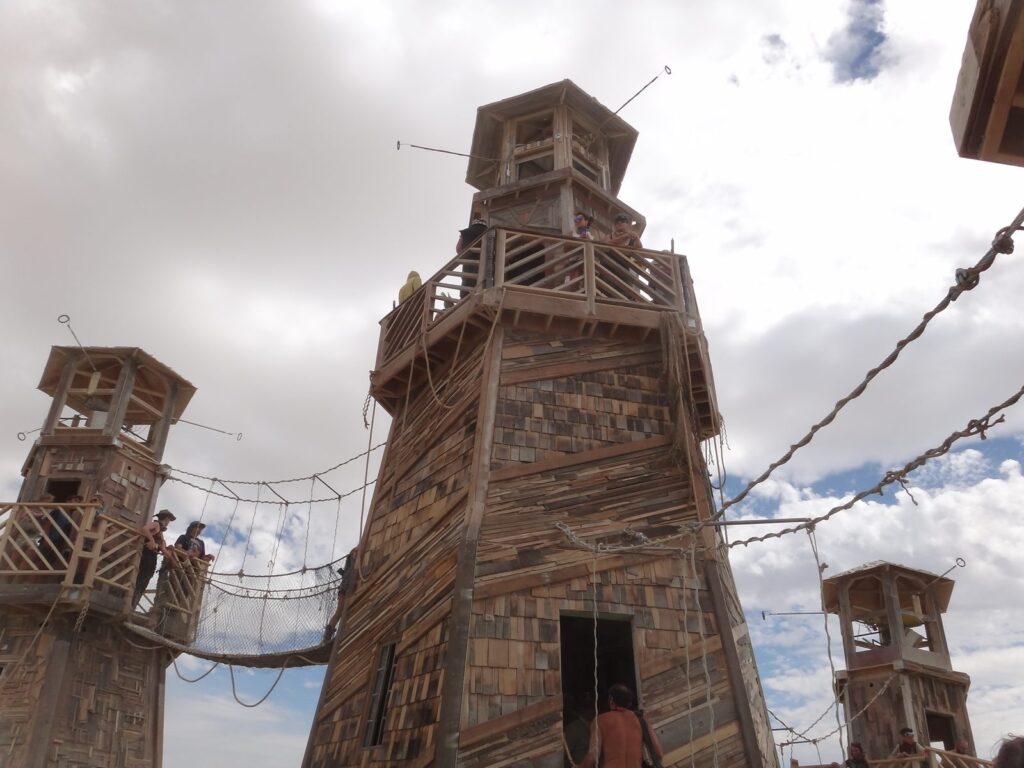
Nothing does build itself. That’s the thing I most want to say about this place. One year I wandered into an installation called the Black Rock Lighthouse Service — leaning lighthouse towers, rope bridges, rooms decorated down to the doorknobs — and I stood inside it and cried. Not at the beauty exactly. At the arithmetic. Months of weekends, tens of thousands of dollars, hundreds of hands, and no ticket booth, no plaque, no way to even find out whom to thank — all of it spent so that a stranger like me could climb around inside someone else’s imagination and feel, without a word being said, we made this for you. The city runs on that arithmetic. It is the highest concentration of creative energy I have ever stood inside — I’ve come to think of it as the exact inverse of a war zone: the same scale of human intensity, logistics, and cost, pointed at making instead of unmaking.
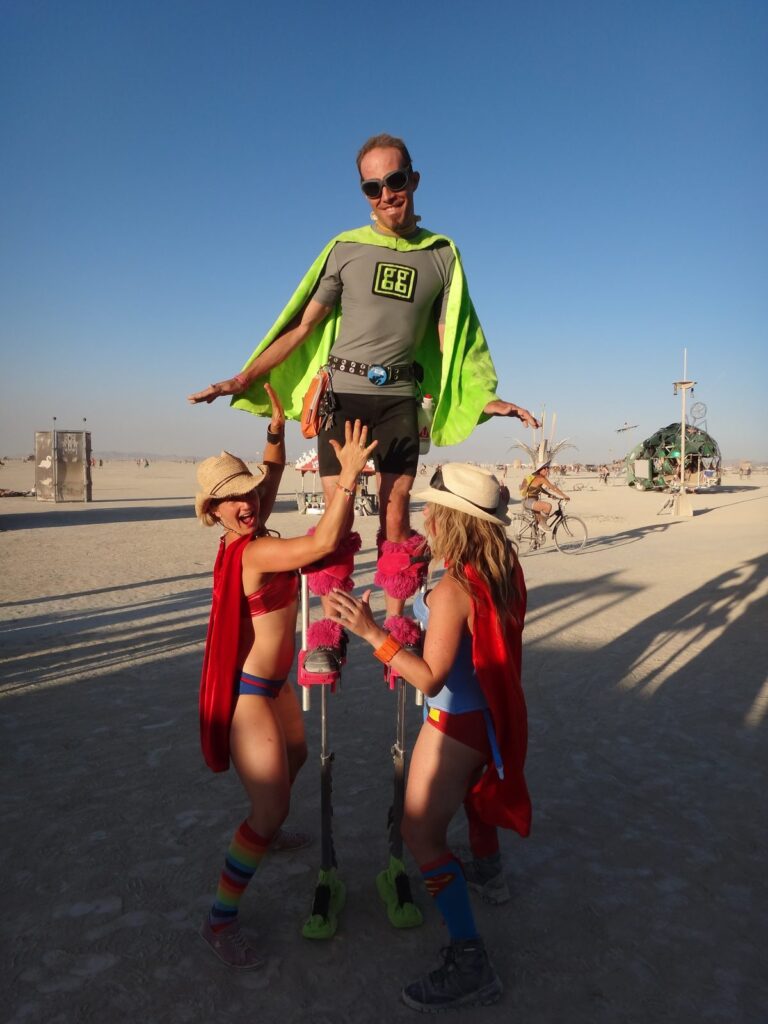
I recognized the operating principles the moment I met them, because I’d already lived them once, five years earlier, in a green cape in Ireland: gifting, radical self-reliance, communal effort, immediacy. Black Rock City is where those values stop being a story you tell and become a practice you rehearse annually — where I built and rebuilt, kept a friend’s dream alive, and found the address that taught my heart to go first. The cape even made the trip.
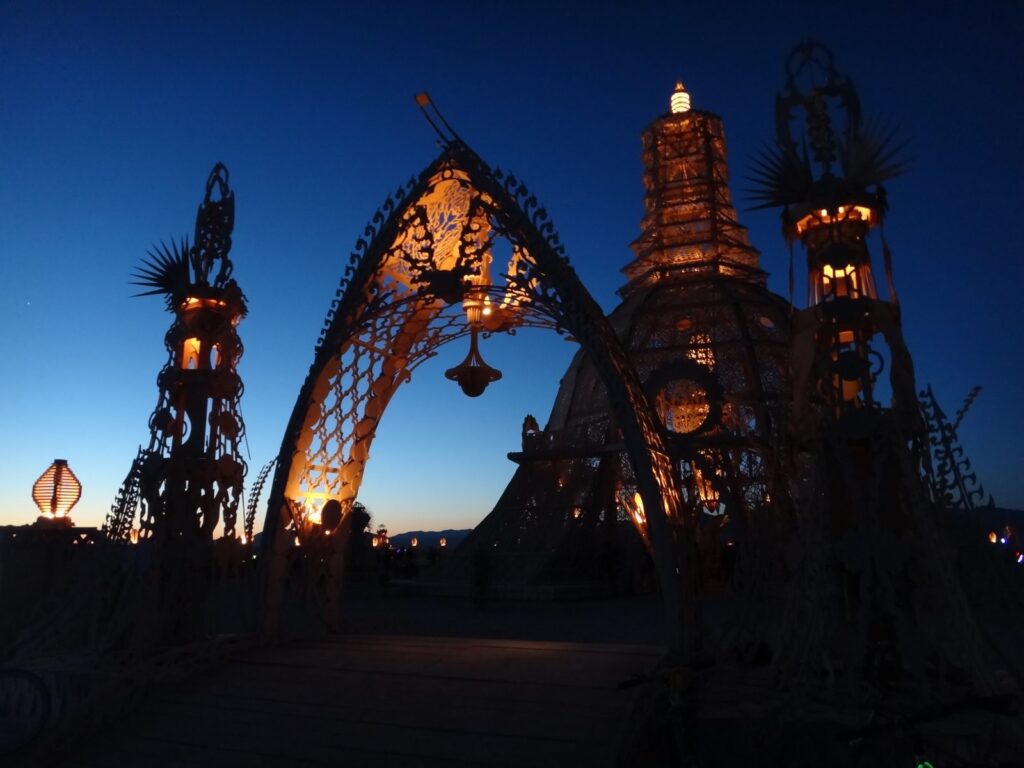
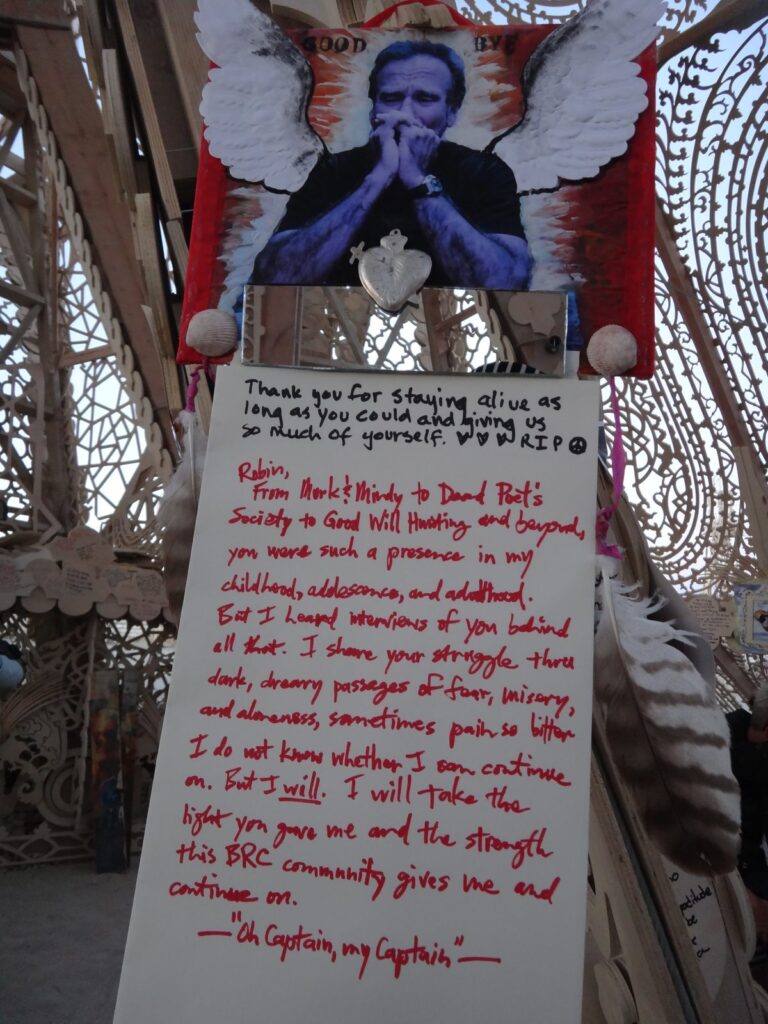
And when the city needs to grieve, it has an organ for that too. The Temple is where Black Rock City takes its losses: photographs, letters, names in marker on every beam, and at the end of the week it burns while tens of thousands of people stand in a silence you can lean on. In 2014, in David Best’s Temple of Grace, I wrote a note to Robin Williams. It burned with everything else, which was the point — and yet I can still see my handwriting on that wall. What the fire takes was never the real thing. The words are me, living on. This entire site is built on that premise.
I won’t pretend the city is only its best self. It’s a real city now, and real cities accrete bureaucracy, politics, and people wielding small power; some of my last seasons wore me down in ways I’ve written about elsewhere with a door politely closed. The old joke covers it: it was better next year. Burners have been saying that since before I arrived, and it’s somehow always been true.
Which is convenient, because next year is coming. I’m going back — to help build whatever I can get my hands on, to hug like I mean it, and to find out what the city and I are to each other now.