

Black Rock City, 2011–2017
My first year at Burning Man, 2011, felt like home before I’d finished unpacking. People talk about finding their tribe; I’m careful with words like that, but I don’t have a more accurate one. And within the city that felt like home, there was a specific address.
I owe it to a moment of eye contact. Earlier that year, at my friend Charity’s birthday party, I met a man with pink hair whom I’d somehow known of for a decade — back in San Diego’s early-web days he was internet-famous, and a friend of mine had gone to his high school. John Styn: Pink Jesus to some, Halcyon to most, burning since 1998. At that party he looked into my eyes for a moment, the way he does, and invited me to camp with Pink Heart. The camp was only in its second year then, an offshoot of a lounge that had formed inside Bat Country — a camp named, yes, for Hunter S. Thompson. I said yes to the pink.
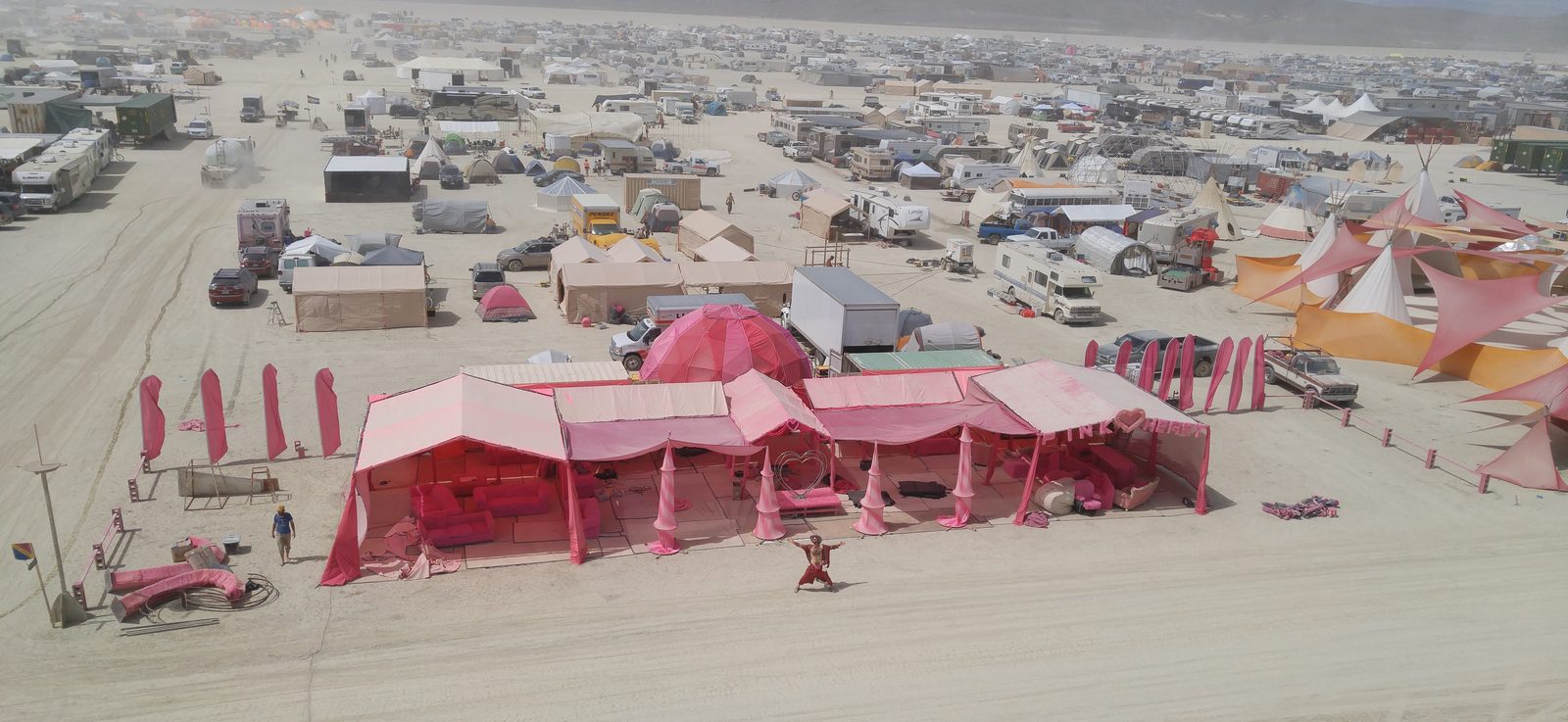
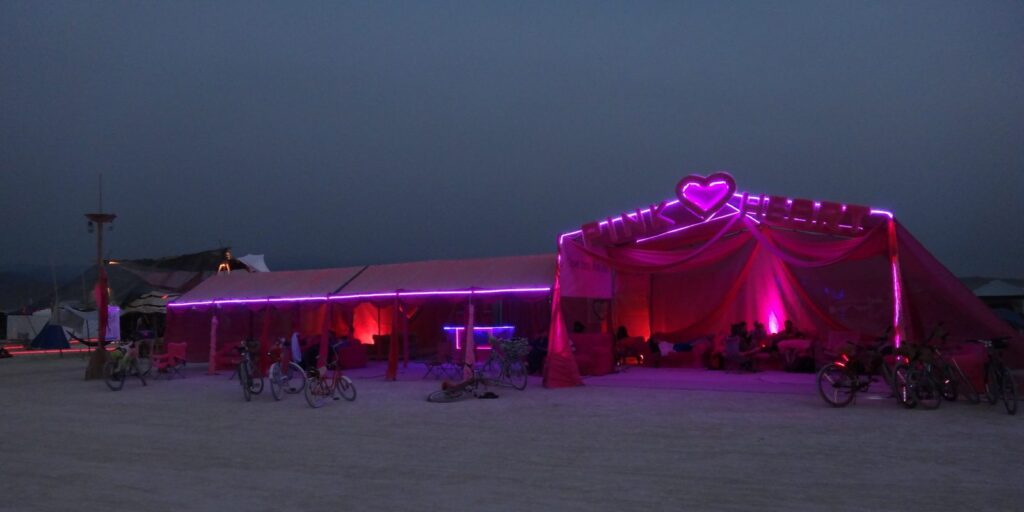
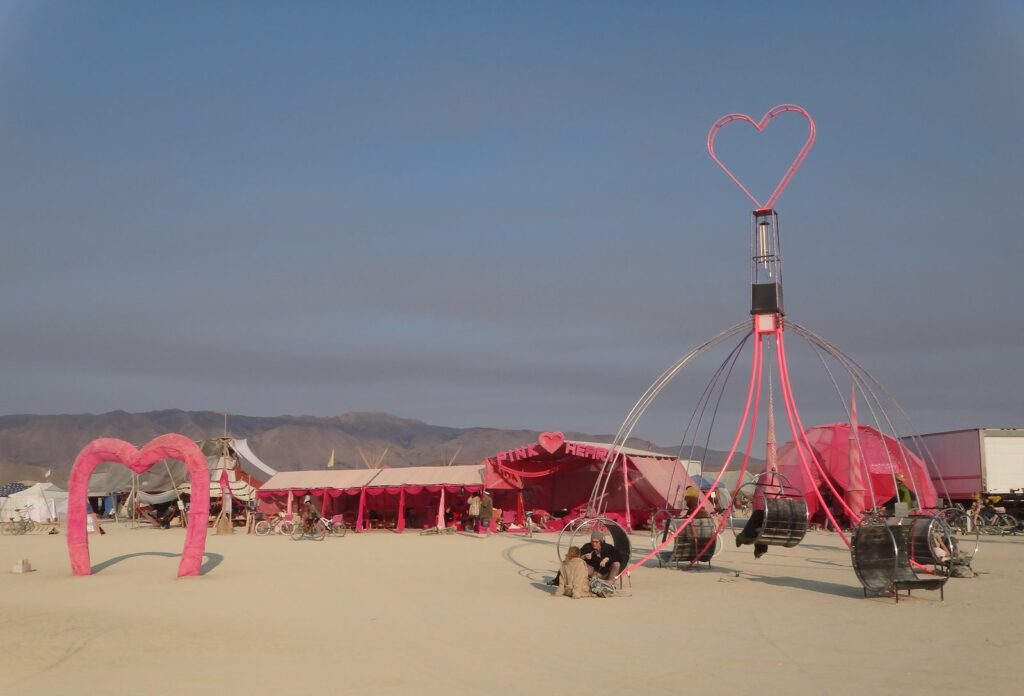
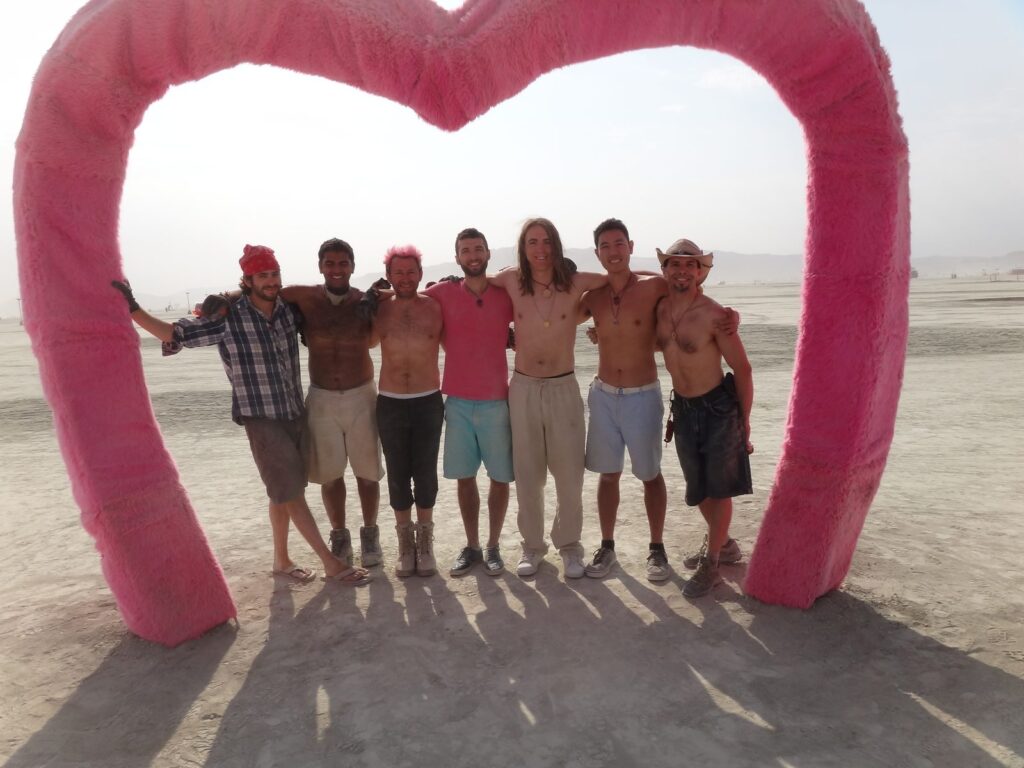
Pink Heart is a front porch on the Esplanade: fur couches the color of a valentine, shade that reads as mercy by noon, a water bar, and people whose gift to the city is rest — that, and hugs delivered like they mean it, a philosophy John inherited from his Grandpa Caleb and broadcast for years as Hug Nation. The camp calls itself a lighthouse for body and soul. Membership was never a fee; it was a commitment — three hundred dollars, a gallon of water, a pink pillow, and your actual participation. You don’t camp at Pink Heart. You help create it.
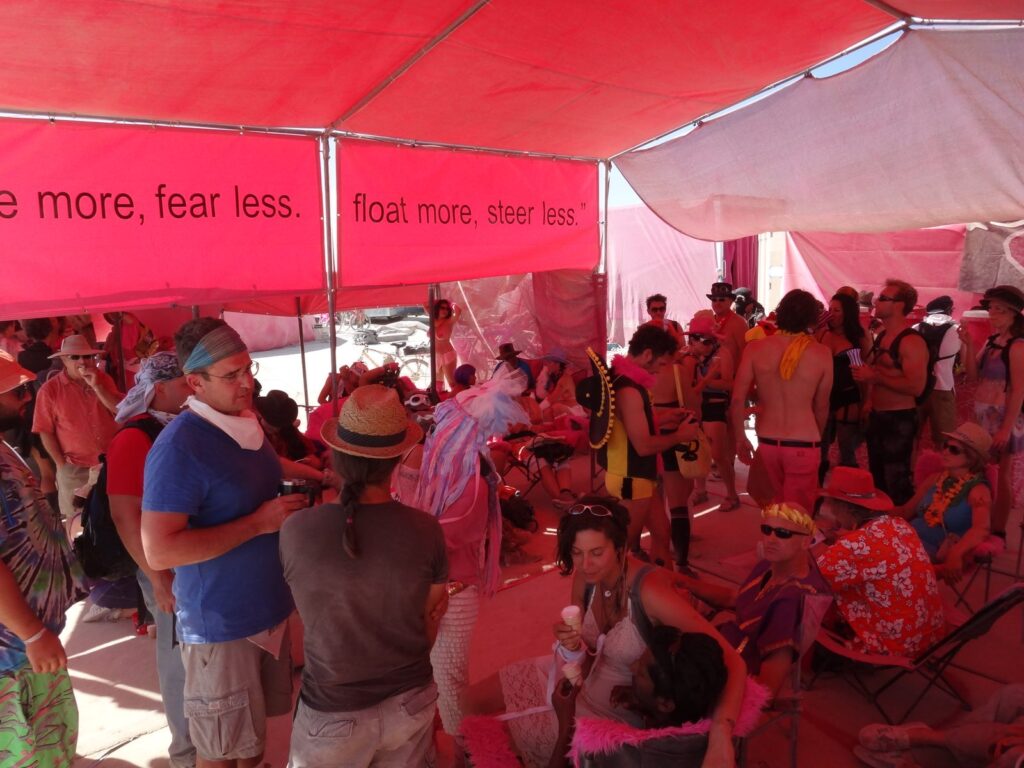
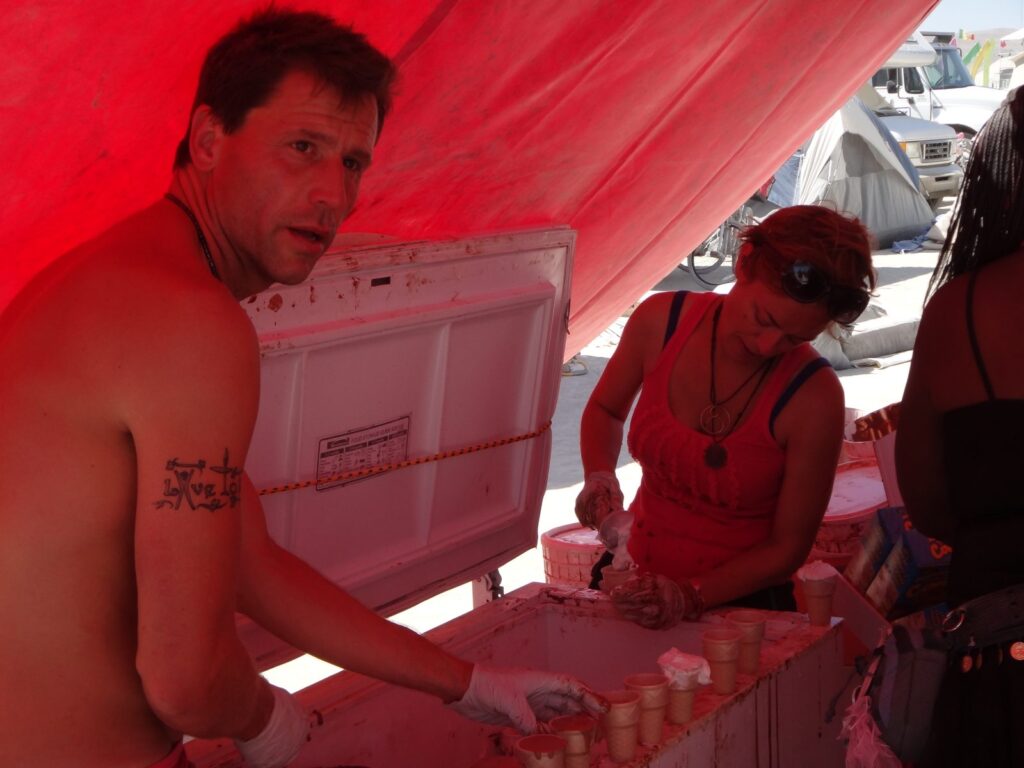
Here is what it did to me. I had spent most of my life leading with the analytical head — systems first, feelings queued behind them. Pink Heart was the place where the other order finally took: heart first, and the systems in service of it. Not by abandoning the technical — a pink living room in a dust storm needs engineers, and the camp already had serious ones, Kiwi and Paul Breed among them, with systems worked out before I arrived. What changed is what the engineering was for. Every zip tie and LED run existed so that a stranger who wandered in at 4 p.m., cooked and overwhelmed, could lie on something soft and be told, without words, that they were welcome. My self-expression blossomed out there. The cape from Ireland had found its city.
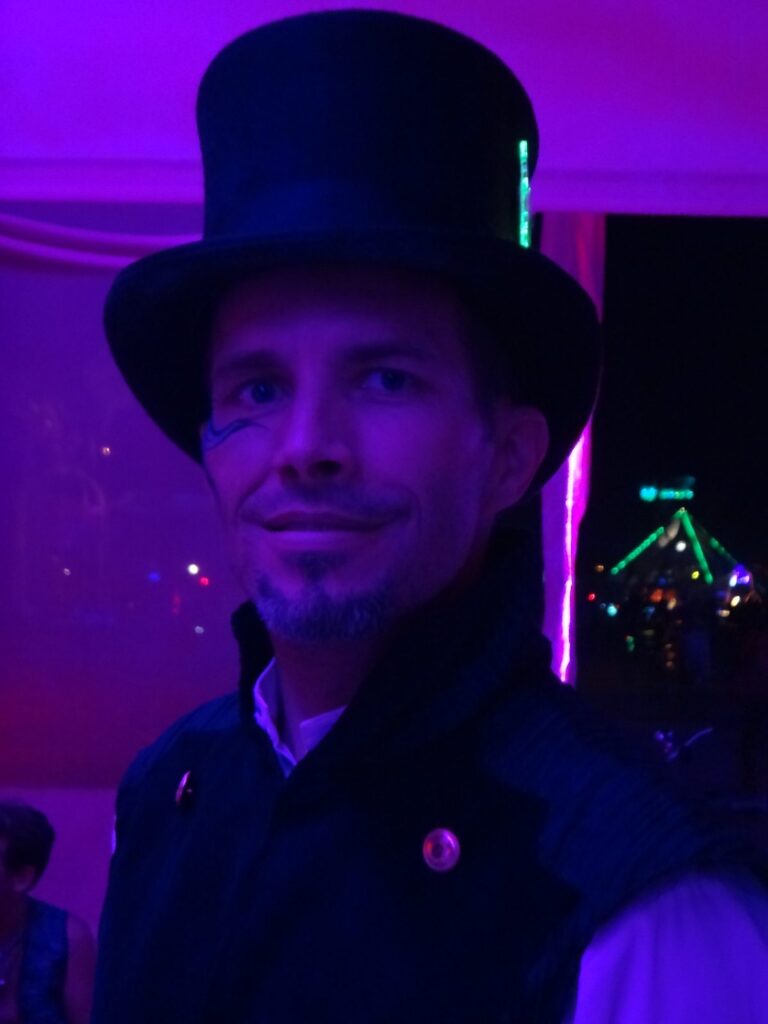
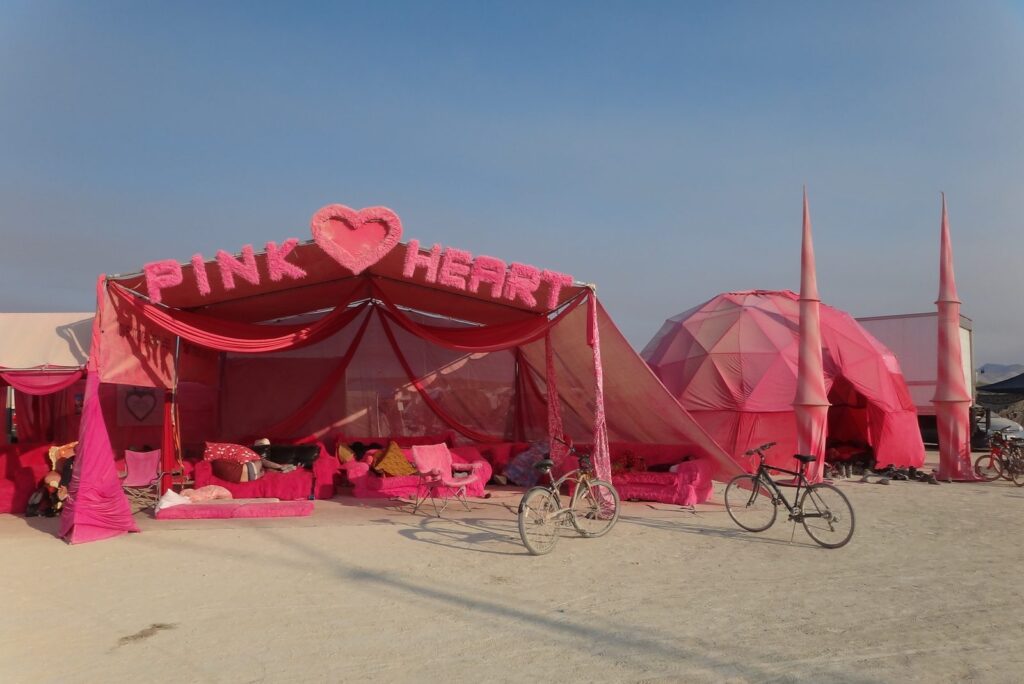
Family is the right word, and family means loss too. Some of the hearts we camped with are gone now. Nick — this page remembers you.
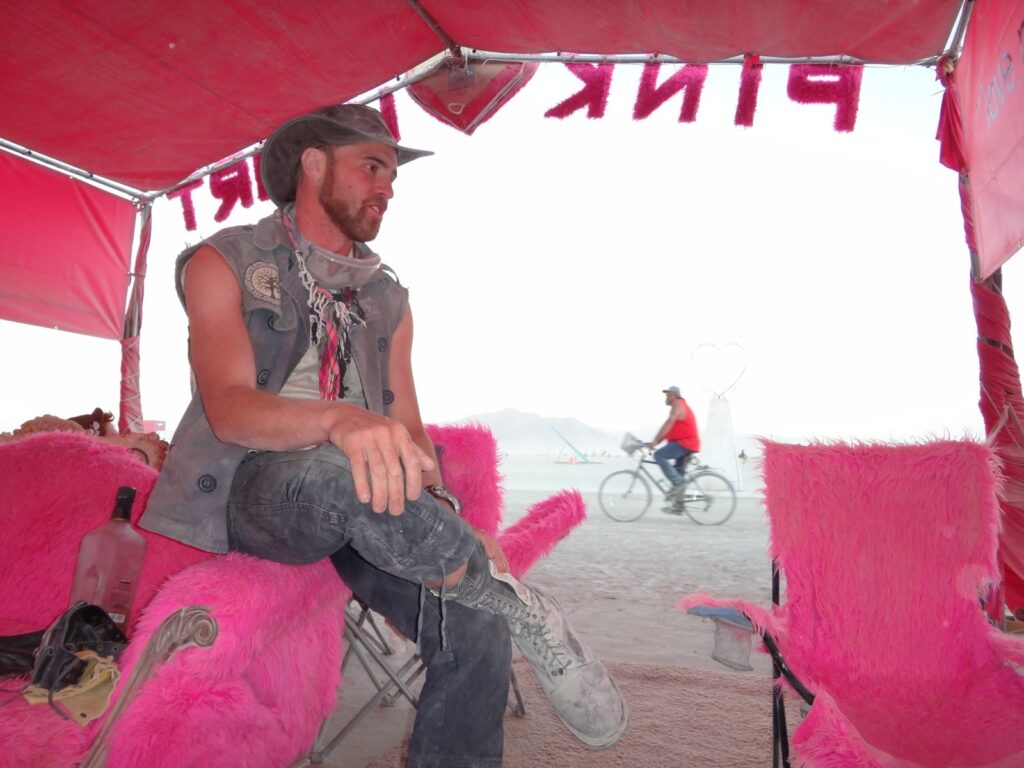
My playa name came from an electrical problem. The LEDs behind the heart at the apex of the shade structure failed, and the fix meant getting over the top of it. I’d been wearing six-foot stilts all build to hang things high, and I was comfortable on them, so I set an A-frame ladder under the heart and climbed the ladder on stilts — a short, braced transition, well inside my limits, whatever it looked like from the road. What it looked like from the road, apparently, was madness: a DPW crew rolling down the Esplanade stopped, yelled “That looks dangerous!”, took a picture, and drove on — and when the people who spend a month in the dust building the city before anyone arrives think you’re the crazy one, that’s a kind of diploma. John laughed, shook his head, and named me Stiltladder. For the record: in all my years on playa, I never had a serious injury. I climbed some things. I knew my margins.
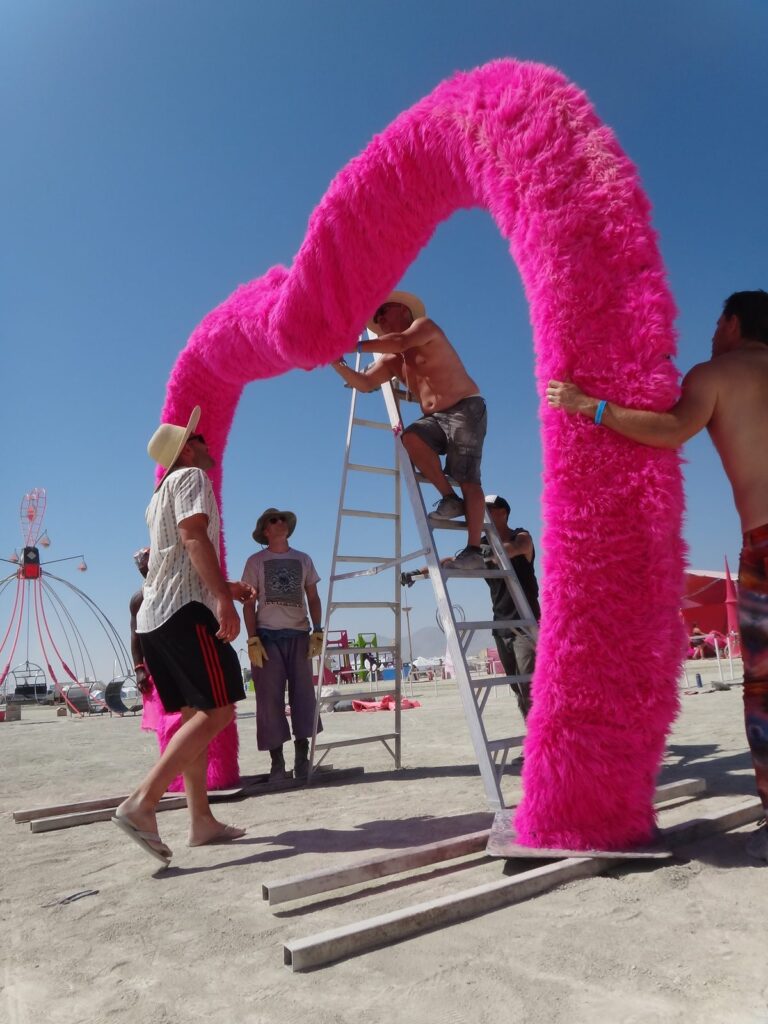
The Dream Swing stood at our front door for years — that story has its own page. My last seasons with the Burn were harder, and that part of the story stays behind a closed door for now. What I’ll say is that a city of seventy thousand accretes bureaucracy the way any city does, and it wore on me. But I don’t want to be left there, because it isn’t the truth of the place. Black Rock City is the highest concentration of creative energy I know of — the opposite, I’ve come to think, of a war zone: all that human intensity, pointed at making instead of unmaking.
The old joke among Burners is that it was better next year. I’m going back to find out.