


Black Rock City, 2013–2017
The Dream Swing was never my idea. That turns out to be the point of this story.
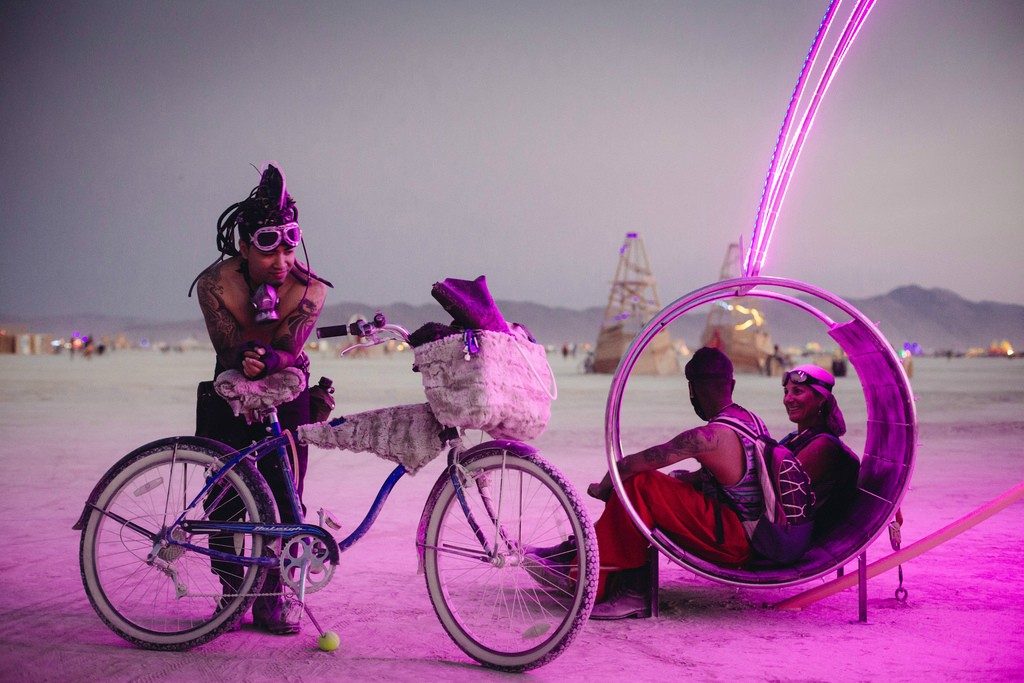
Joe Beal dreamed it: thirty-six feet of steel rising to a neon heart, arcs of light falling away like the ribs of a glowing tent, swing chairs hanging in the middle of the desert where no swing has any business being. By day it gave shade and a place to be nobody in particular. By night it was a lighthouse — that was the actual theme of our camp, a lighthouse for body and soul — and people navigated to it from a mile out, arrived as strangers, swung awhile, and left as something else.
I started as Joe’s crew, summers and build weeks, learning the piece bolt by bolt the way you learn a friend’s handwriting. And when Joe was done — makers finish before their dreams do, sometimes — he handed it to me. Burning Man talks constantly about gifting, and mostly that means things: food, help, shade, music. It took me years to see that the rarest gift on that whole desert floor was the one Joe gave me. He trusted me with his dream. Not a copy of it. The dream itself, trailer and all.
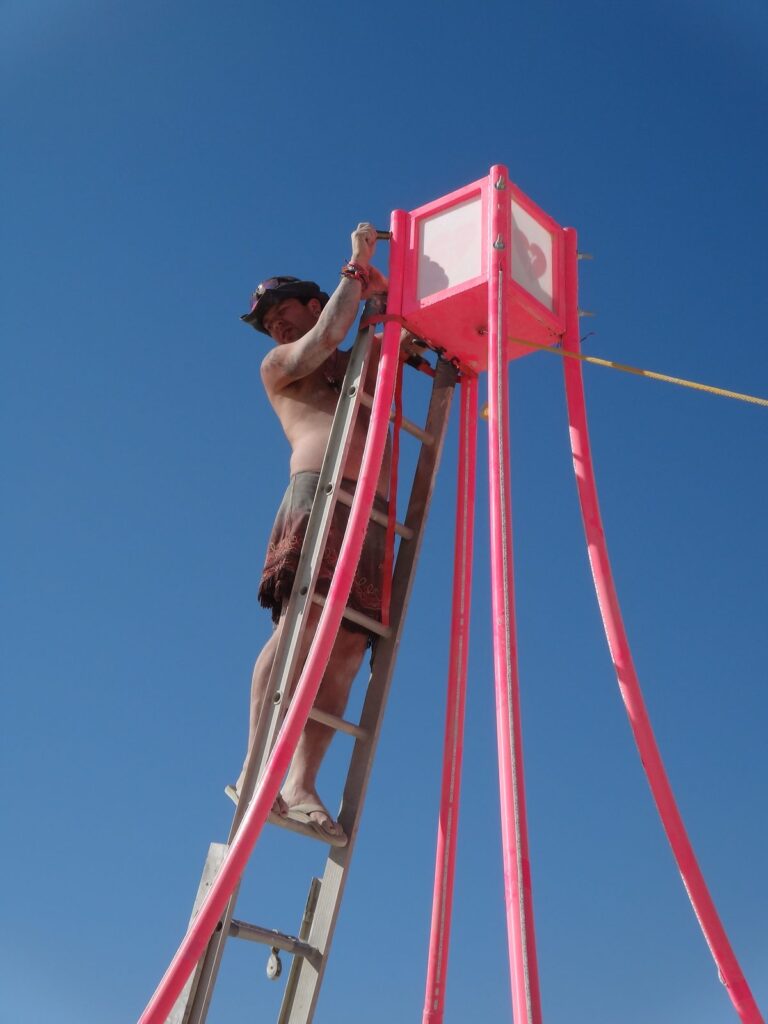
Then a winter storm in Empire, Nevada crushed it in storage, and its maker was ready to let it go. On paper it was a total loss, and letting it rest would have been a reasonable ending. I chose otherwise. The engineering story of what came next — six months as a resident artist at the Generator, every system opened up, nine thousand LEDs, the beacon that finally, finally worked — is told properly on my work site. This page is about the why.
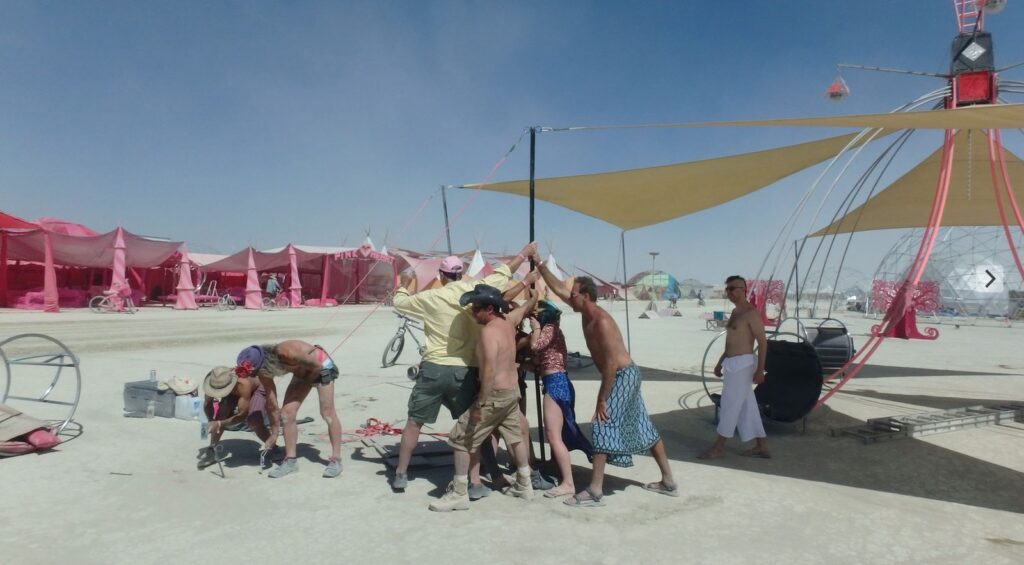
Here is what stewarding someone else’s dream taught me. Making a new thing is loud, and the world applauds it. Keeping a thing alive is quiet, and mostly nobody sees: the recoating, the rewiring, the soldering of broken LED strips in a dust whiteout while the wind tries to take the work out of your hands. I had thought of maintenance as what you do between the real work. Those years taught me it is the real work — that care, sustained past the point of convenience, is the most honest form love takes. You change the thing, and the thing changes you, until the line between Joe’s dream and mine quietly stopped existing.
The Swing stood at Pink Heart, the camp that was my home out there — a heart on its mast, a camp full of hearts below. That story is its own, and it’s coming.
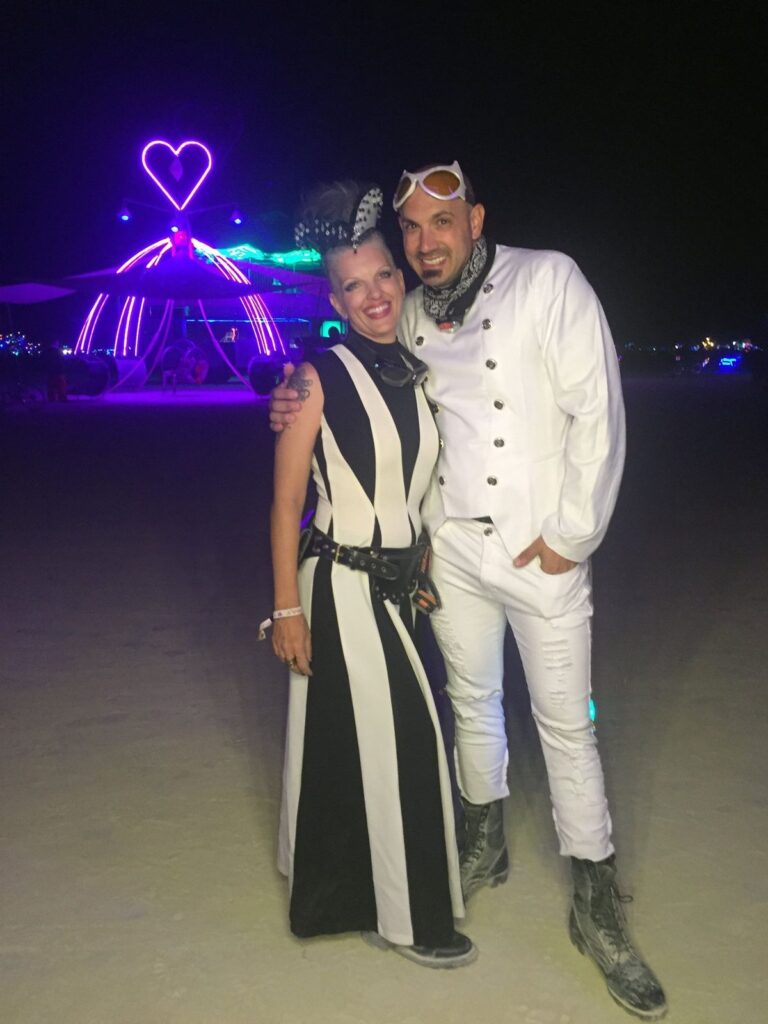
Twenty years from now, no one will ask who authored the Dream Swing, and that’s fine. Authorship was never what it was for. It was for the couple in the hoop chair at dusk. It was for the stranger who walked toward a heart on the horizon and found people under it. And it was for me: evidence that I’m someone who will care for a dream that isn’t mine until it is.
Where is it now? I honestly don’t know. Joe says it stands on a hill somewhere in Oregon, on private land, painted entirely white. I can’t confirm it, and I find I don’t need to. A lighthouse doesn’t stop existing when you sail out of range.